Choosing the Ideal Work Surface for Micro Macrame
Micro macrame demands precision. Every knot, every millimeter of tension, every structural decision shapes the final result. While thread choice and technique often receive most of the attention, your work surface quietly determines how controlled and refined your work will be.
A stable foundation influences:
knot consistency
symmetry
proportion accuracy
posture and comfort
finishing quality
Before choosing your threads or refining your finishing technique, it’s worth understanding the core setup principles that shape your entire process. If you’re just beginning, I recommend starting with Micro Macrame Foundations – Everything You Need to Know to Get Started, where we explore the essential tools, materials, and mindset behind precision work.
Let’s examine which surface truly supports precision work.
Work Surface Quick Comparison
Macrame Board
Stable, often printed with a measurement grid for proportion control. May lack sufficient height for deep pin anchoring; kit pins are often too thick for micro work.
Clipboard
Portable and convenient. Popular among artists using waxed threads like Linhasita, as these threads resist unraveling. Limited mounting stability.
Foam Board
Excellent balance of size and stiffness when properly selected. Ideal for larger compositions (including Tree of Life designs up to 20 cm in diameter).
Working Directly in the Hands
Minimal equipment required, but limited stability for intricate or highly symmetrical projects.
This section may contain affiliate links. If you choose to purchase through them, it supports the creation of tutorials and educational content at no additional cost to you. #ad #etsycreatorco
Macrame Board: Structured Precision
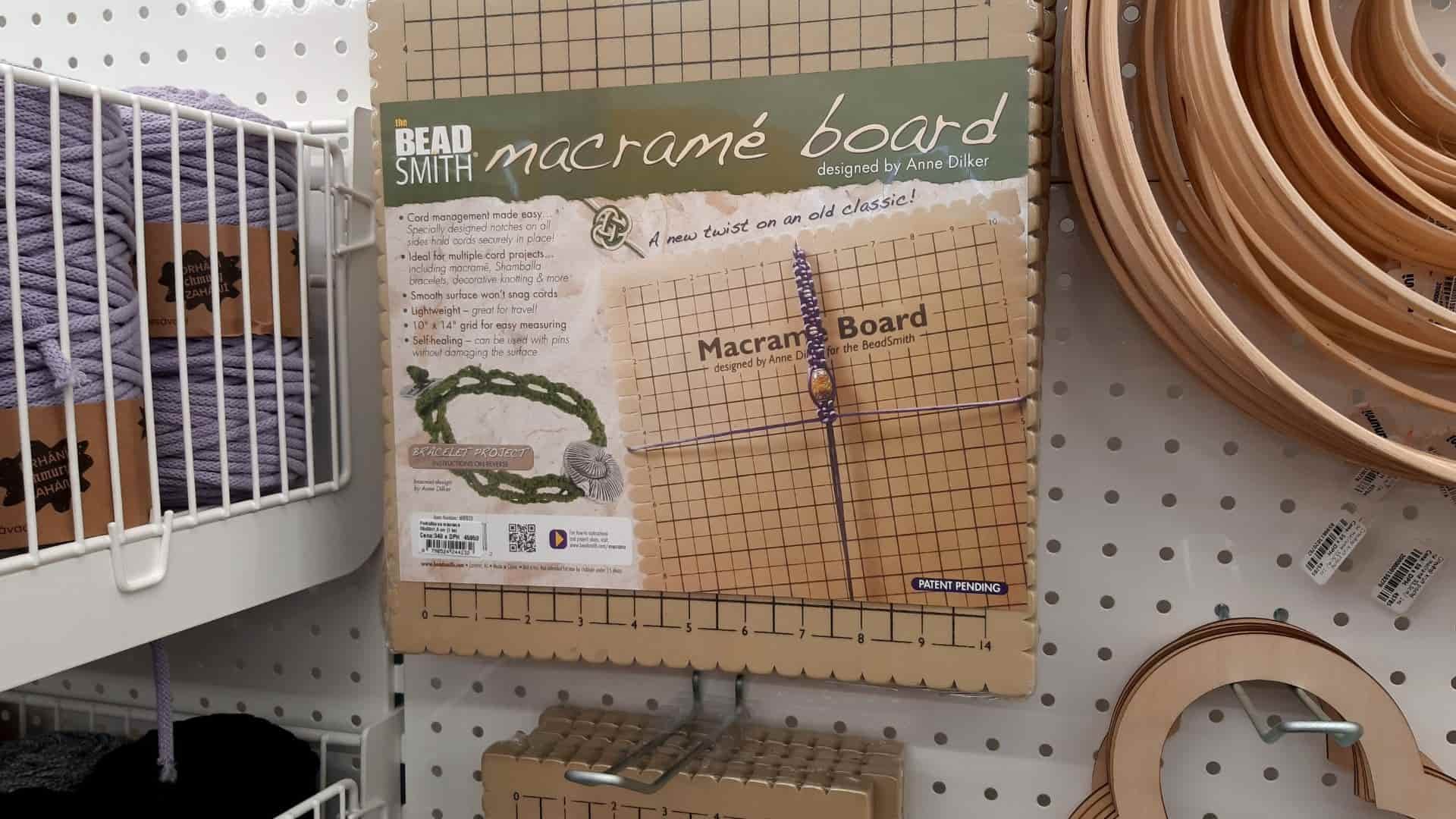
For those who want a stable board with a printed measurement grid for accurate proportions, I’ve linked the model below
Pros
A macrame board offers a stable and accessible surface, especially for small and medium-sized projects.
One major advantage is the printed measurement grid that many boards include. This grid significantly simplifies maintaining correct proportions during knotting — especially in geometric or symmetrical designs.
In traditional micro macrame books, you may also find an alternative precision technique: pinning millimeter paper directly onto the board. This allows for extremely accurate spacing and layout control in detailed compositions.
For projects that rely on symmetry and measured spacing, this feature alone makes the macrame board highly practical.
Cons
However, some boards lack sufficient height for deeply anchoring threads close to the head of the pin. This can slightly reduce tension control in more demanding designs.
Additionally, standard pins included in kits are often too large for delicate micro macrame. Replacing them with thinner pins improves accuracy and overall neatness.
Clipboard: Freedom and Mobility
If you prefer a portable setup for working with waxed threads like Linhasita, you can find a similar clipboard here.

Pros
The clipboard is a favorite among makers who value mobility. It allows you to work comfortably outside your studio or move between spaces easily.
It is particularly popular among artists working with waxed threads such as Linhasita, because these threads:
do not easily unravel
hold knots firmly
allow greater freedom without heavy pinning
This combination makes clipboards surprisingly effective for certain types of jewelry projects.
Cons
However, clipboards do not allow traditional pinning into the surface. This limits structural stability.
For highly intricate or tension-sensitive designs — especially circular compositions — the lack of firm anchoring can become restrictive.
Foam Board: Stability for Larger Designs
This is a foam board that I recommend for all types of projects and use every day.

Pros
When chosen carefully for size and density, a foam board offers one of the best working experiences.
It provides:
deeper pin hold
increased surface stability
flexibility for larger layouts
For larger projects — including Tree of Life designs with a diameter of up to 20 cm — a wide, high-density foam board provides the level of stabilization required for structural precision and a refined final result.
The crucial factor is the ability to anchor threads all the way to the head of the pin. When properly secured at this depth, the entire composition remains in a single plane, preserving symmetry, tension consistency, and proportional balance throughout the process.
Cons
The main challenge is selecting the right density. Foam boards vary significantly, and finding the ideal stiffness may require some experimentation.
However, once you identify the right type, it becomes a long-term investment in precision.
Community Insight
One of our YouTube channel Members shared an inventive alternative worth mentioning:
“I use a 1-inch foamy pad typically used to form Russian ceramic dolls.”
Thank you, Dario, for this thoughtful suggestion.
This is a beautiful example of how experience refines technique. Inside the Members area, we often exchange practical adaptations like this — small adjustments that make a significant difference in precision work.
Working Directly in the Hands: Minimal Equipment, Maximum Skill
Pros
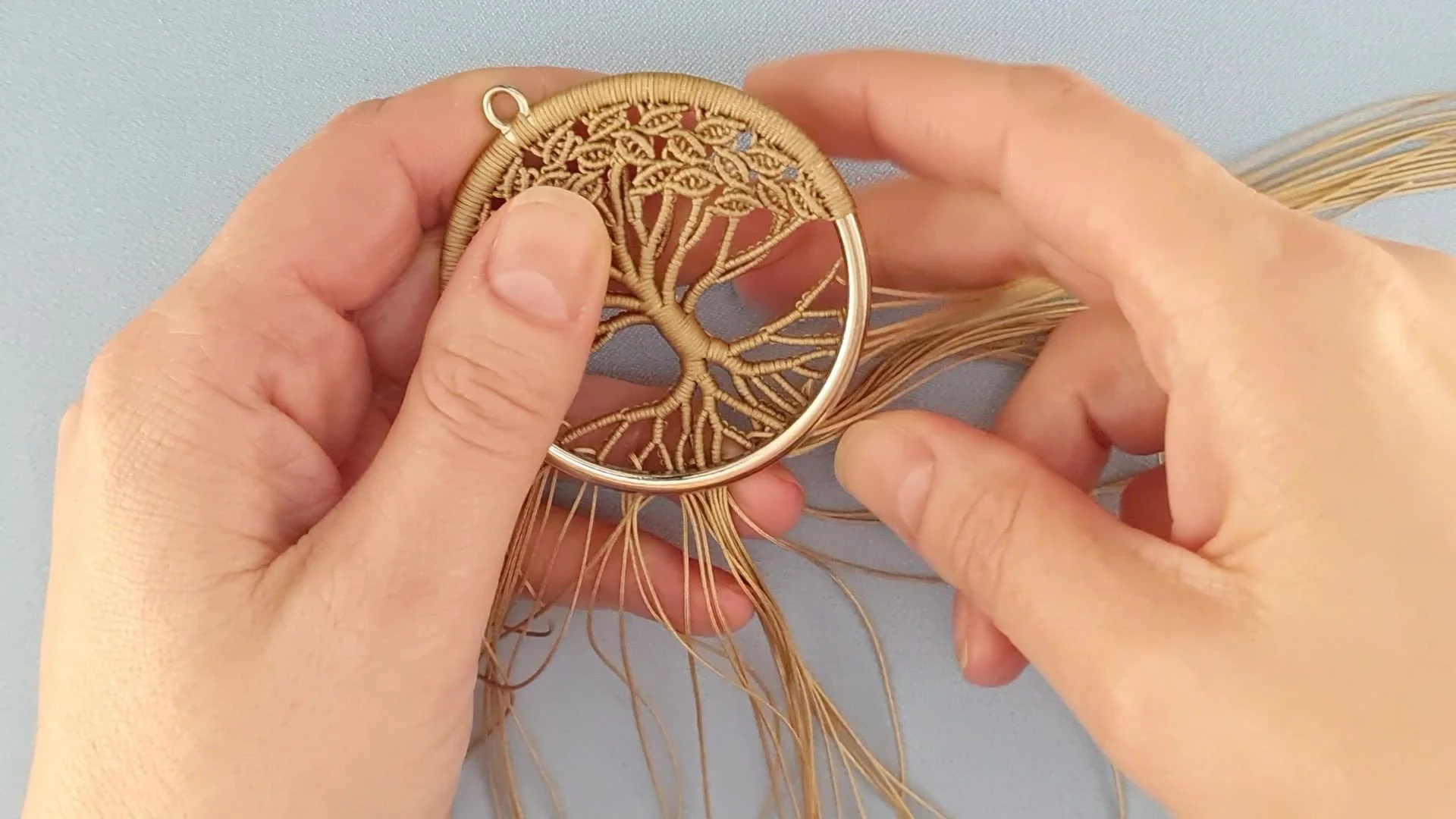
It is entirely possible to work directly in your hands. This approach requires no equipment and offers freedom of movement.
With practice, it can feel intuitive and fluid.
Cons
However, stability is limited. For intricate projects that demand consistent spacing and tension, working without a mounted surface increases the risk of distortion.
Matching Surface to Project Type
A simplified guide:
Small jewelry → clipboard or compact macrame board
Medium decorative pieces → macrame board with grid
Intricate complex projects → dense foam board
As your designs increase in structural complexity, your foundation must evolve accordingly.
Why Surface Choice Directly Affects Technique
Many artists focus heavily on thread thickness, tension style, or knot variation — yet overlook how surface stability impacts all three.
Your work surface directly affects:
alignment accuracy
proportional balance
structural integrity
final polish
Precision is not accidental. It is built into the setup.
Final Thoughts
In micro macrame, craftsmanship begins before the first knot is tied.
The right work surface is not just a practical accessory — it is part of your technical system.
Choose based on:
project size
structural demands
thread type
portability needs
personal ergonomics
Experiment thoughtfully. Refine gradually.
Because in detailed work, stability is elegance.
Happy crafting, dear companions.
This article is part of the Micro Macrame Learning Hub—a curated collection of tutorials organized by techniques, materials, Tree of Life projects, and skill level.