How to Learn Micro Macrame: Video Tutorials, PDF Patterns & Membership
Learning micro macrame is not only about mastering knots. It is also about finding a learning method that matches the way you process information, practice new techniques, and build confidence over time.
Some makers learn best by watching every movement unfold in real time. Others prefer structured written instructions they can revisit at their own pace. Many discover that combining both approaches creates the strongest foundation.
Over the years, I have shared micro macrame through free YouTube tutorials, detailed PDF patterns, and extended Members-only video lessons. Each format serves a different purpose, and understanding those differences can help you choose the right path for your own creative journey.
Why Learning Format Matters
Micro macrame is a precision-based craft.
Unlike larger-scale macrame projects, small variations in tension, thread placement, or knot direction can significantly affect the final result. Because of this, the learning format you choose can have a direct impact on how quickly you progress.
The goal is not to find the "best" format.
The goal is to find the format that helps you understand, practice, and enjoy the process most effectively.
🎥 Learning with Video Tutorials

For many beginners, video tutorials are the most natural starting point.
Watching an experienced maker work through a project allows you to see how knots are formed, how threads are managed, and how tension is maintained throughout the process.
Video tutorials are particularly useful when learning:
• knot movement and hand positioning
• thread management
• tension control
• project assembly and finishing
On my YouTube channel, most tutorials are available free of charge and provide a complete overview of the project from start to finish.
For visual learners, seeing the process unfold often removes uncertainty and makes new techniques easier to understand.
📘 Learning with PDF Patterns

While video shows movement, PDF tutorials provide structure.
A well-designed PDF allows you to slow down, revisit specific sections, and study individual steps without constantly searching through a timeline.
This format is especially valuable when working on more complex projects that require precision and repeated reference.
PDF tutorials are ideal for:
• learning at your own pace
• reviewing specific sections
• working offline
• understanding project structure
• following detailed step-by-step photographs
Many makers choose to keep PDFs open beside their workspace while knotting, using them as a practical reference throughout the project.
If you would like to learn more about this format, see:
Photo + Transcript Guides: A Different Way to Learn Micro Macrame
📊 Using Video and PDF Together
In practice, you do not have to choose between video tutorials and PDF patterns.
Each format supports a different part of the learning process.
Video tutorials help you understand movement, rhythm, and knot execution in real time.
PDF patterns provide a structured reference that is easy to follow while working and revisit whenever needed.
Many makers find that combining both formats creates the most effective learning experience:
Watch the video to understand the overall project and workflow.
Follow the PDF while knotting.
Return to specific video sections whenever you want to see a technique in motion.
Rather than competing with each other, video and PDF tutorials work best as complementary tools.
The video shows how a project comes together.
The PDF helps you understand how it is built.
When Membership Becomes Valuable
Free tutorials and PDF patterns provide a strong foundation for learning micro macrame.
As your skills develop, you may begin to ask deeper questions:
• How can I adapt a pattern to my own ideas?
• How do different materials affect the final result?
• How can I create more original and complex designs?
At this stage, learning often shifts from following instructions to understanding the structure behind a design.
Membership was created for makers who want to explore micro macrame beyond individual projects and develop a deeper understanding of technique, structure, and design.
It is not required to learn micro macrame.
But if you enjoy understanding the why behind a technique—not only the how—it can become a valuable next step in your creative journey.
A Tree of Life as a Learning Project

The Tree of Life is one of the most iconic forms in macrame. More than a knotting project, it is an exercise in structure, balance, and design.
While colors and details can be personalized, a successful composition depends on understanding proportions, branch placement, and the relationship between individual elements.
For this reason, Tree of Life projects often benefit from both video tutorials and PDF patterns, combining visual guidance with structured reference.
Why the Tree of Life Requires a Different Approach
The Tree of Life challenges more than knotting technique alone.
It requires the ability to:
• maintain symmetry within a circular frame
• balance branches and roots visually
• distribute visual weight across the design
• manage longer cords and larger-scale structures
The individual knots are often familiar.
The real challenge lies in how they work together to create a harmonious composition. This is where technique evolves into design.
What Video Tutorials Help You See
For Tree of Life projects, video tutorials are particularly helpful because they show:
• branch construction
• crown development
• thread management
• the overall rhythm of the project
Seeing the structure grow naturally often helps makers understand the logic behind the design.
What PDF Tutorials Help You Understand
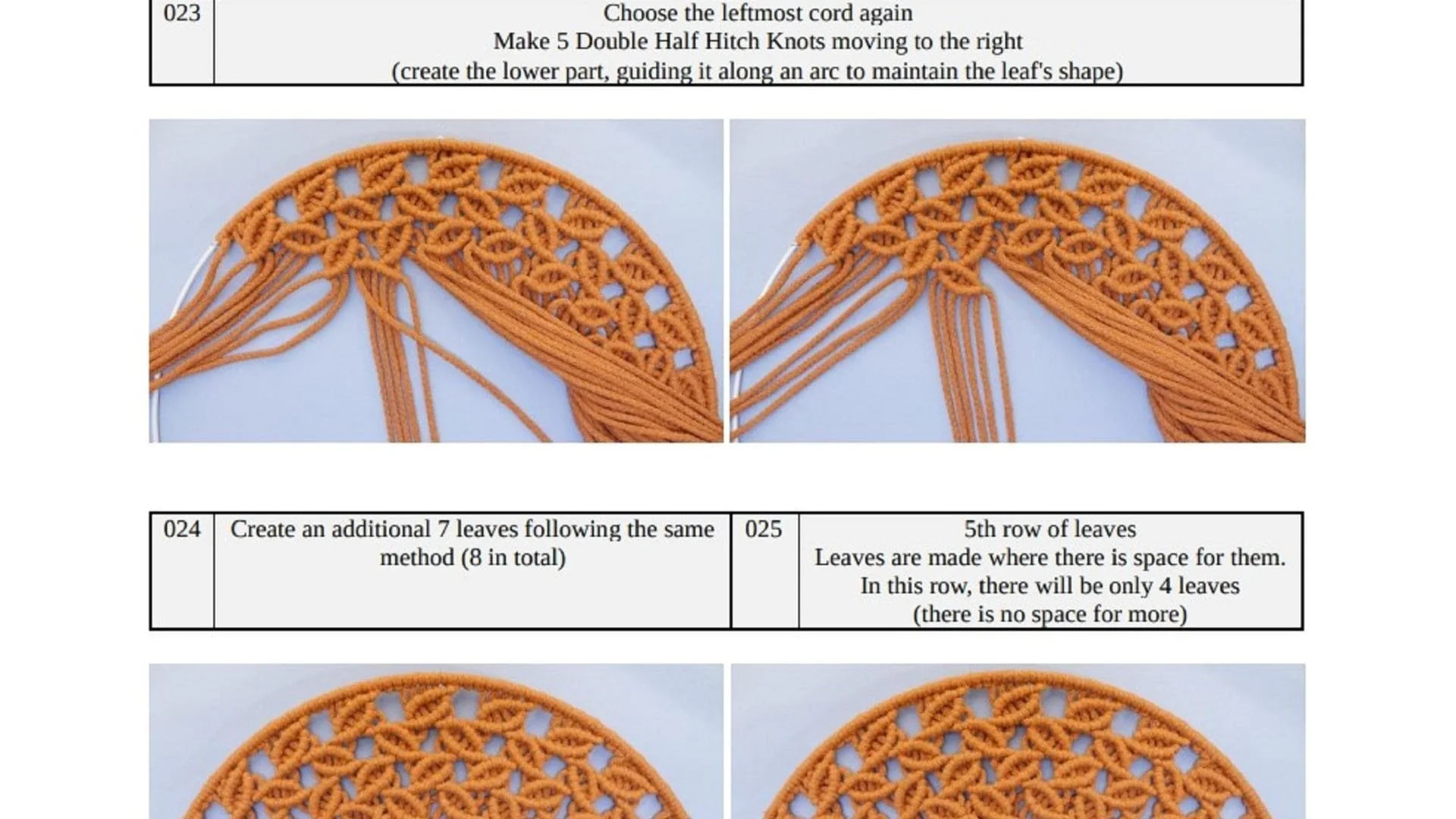
PDF tutorials excel at showing:
• thread counts
• project setup
• branch placement
• reference points and proportions
When working on larger trees, many makers return repeatedly to photographs and diagrams to verify structure before moving forward.
Choosing the Right Level of Guidance
For projects such as Two-Color Tree of Life and Pendant Tree of Life, the complete process is available on YouTube in tutorials lasting approximately two hours.
For those who prefer a slower pace, Members can access the same projects divided into five separate lessons, totaling more than five hours of instruction at normal speed. Membership also includes a discount on all PDF patterns available in my Etsy shop, including the Tree of Life collection.
For makers who enjoy understanding every detail of the process, the extended format offers a more in-depth learning experience.
Which Learning Format Is Right for You?
If You Are a Beginner
Start with:
• Micro Macrame Foundations
• free YouTube tutorials
• simple projects focused on technique
Your primary goal should be understanding structure and tension.
If You Are Building Confidence
Consider combining:
• YouTube tutorials
• PDF patterns
This combination often accelerates learning by providing both movement and structure.
If You're Ready for More Complex Projects
As projects become more detailed—whether a Tree of Life design or an intricate piece of micro macrame—having additional learning resources can be valuable.
Many makers find it helpful to combine:
• PDF patterns for structured reference
• Membership for extended tutorials and deeper technical insights
At this stage, progress often comes from understanding the small details that shape the overall result.
A Final Word
There is no single correct way to learn micro macrame.
Some makers learn through observation.
Others learn through structure.
Most eventually create a combination that suits their own creative process.
The important thing is not the format itself.
The important thing is consistent practice.
Every knot teaches something.
Every project builds confidence.
And over time, what once felt complex becomes second nature.
If you are ready to continue your journey, explore:
• Micro Macrame Foundations
• Choosing the Perfect Micro Macrame Threads
• Two-Color Tree of Life Tutorial
• Digital PDF Tutorials
• YouTube Membership
Choose the format that supports your learning style, stay curious, and allow your skills to grow one project at a time.